Stress Less with How You Dress: Sun Protective Clothing
Posted: July 2, 2026
Here are some three-letter acronyms for your perfect summer weekend: BBQ, DND and … UPF?
Ultraviolet Protection Factor (UPF) indicates how much UV radiation a fabric allows to reach your skin. A great partner to your sunscreen’s Sun Protection Factor (SPF), UPF can provide incredibly effective protection that you don’t need to reapply every 2 hours. Today, you’ll find high-tech, lightweight fabrics designed for UPF performance that are marked as such on the tags. A UPF of 30-49 offers very good protection, while UPF 50+ rates as excellent!
But don’t throw away your entire closet that isn’t certified UPF 50+; you probably already have high-UPF clothing. Here are some factors to consider when you get ready for a fun day in the sun:
- Color: Dark or bright colors absorb UV rays, while white or pale colors let them pass through and affect your skin.
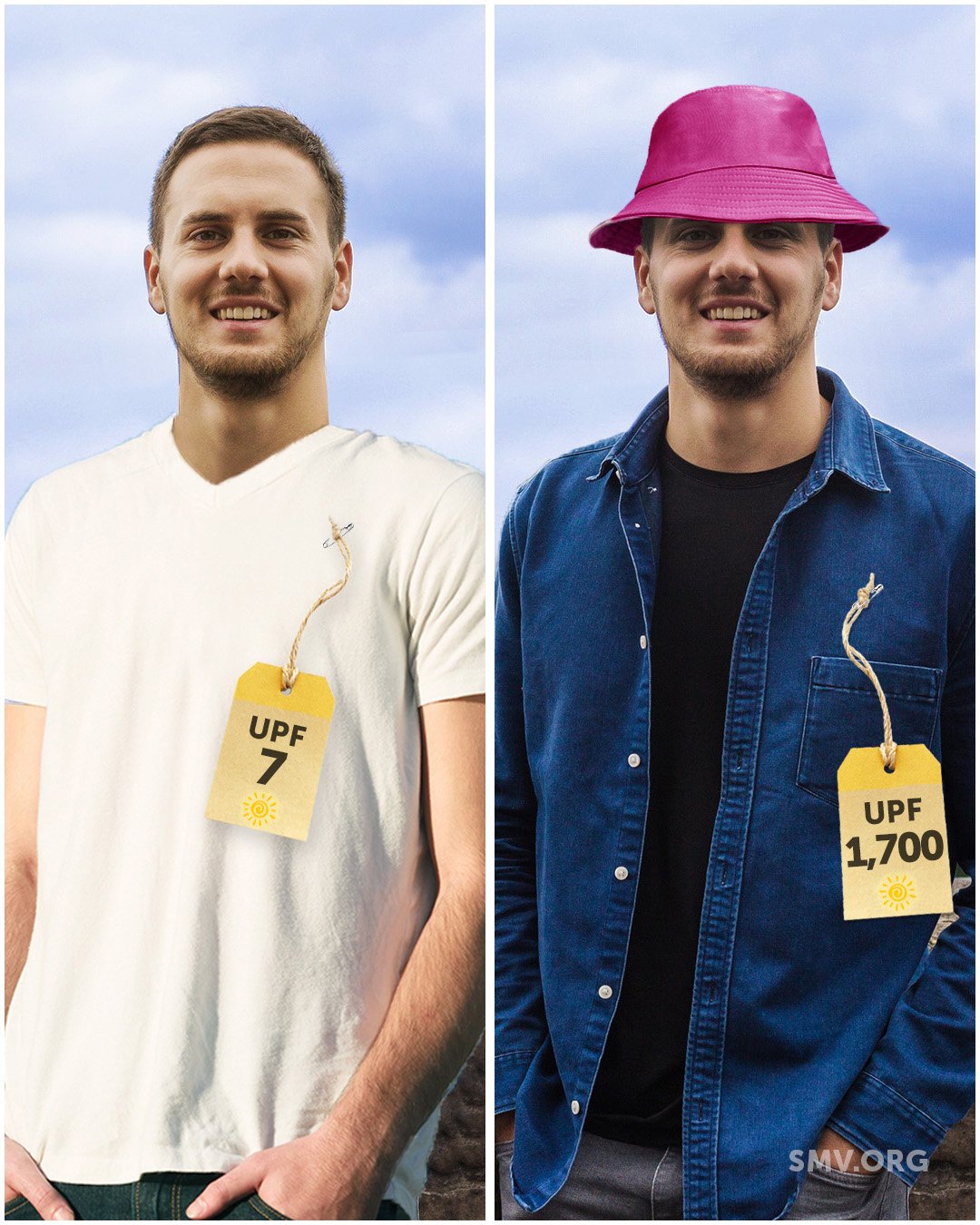
- Construction: Densely woven cloth–like denim or synthetic fiber–is more protective than sheer, thin or loosely woven cloth like lace. Yes, a dark, long-sleeved denim shirt can provide an UPF of about 1,700!
- Material: Not all fabrics are created equal. Unbleached cotton contains natural lignins that act as UV absorbers. Shiny polyesters and lightweight satiny silks can be highly reflective compared to bleached cotton or rayon.
- Fit: Loose-fitting apparel is preferable. Tight clothing can stretch and reduce the level of protection offered.
- Activity: No matter the UPF, if your clothing gets stretched or wet, it will lose some of its protective ability. A white T-shirt provides only moderate sun protection, with an UPF of about 7. But a wet white T-shirt provides an UPF of only 3!