Dr. Rose Basom here, your local biological anthropologist, checking in to bring you the top 5 research breakthroughs of 2025! Unexpected elements can often lead to novel insights and advancements in biomedical sciences, and I can’t wait to see how these stories impact science in the future. I guess you’ll just have to check back in 2026!
#5. We CAN save time in a bottle
We usually think of biological anthropology as digging up bones, but sometimes, the most incredible discoveries are hiding in the back of a shelf! This year, researchers were surprised to find fish DNA that were preserved using something unexpected: rum and whiskey!
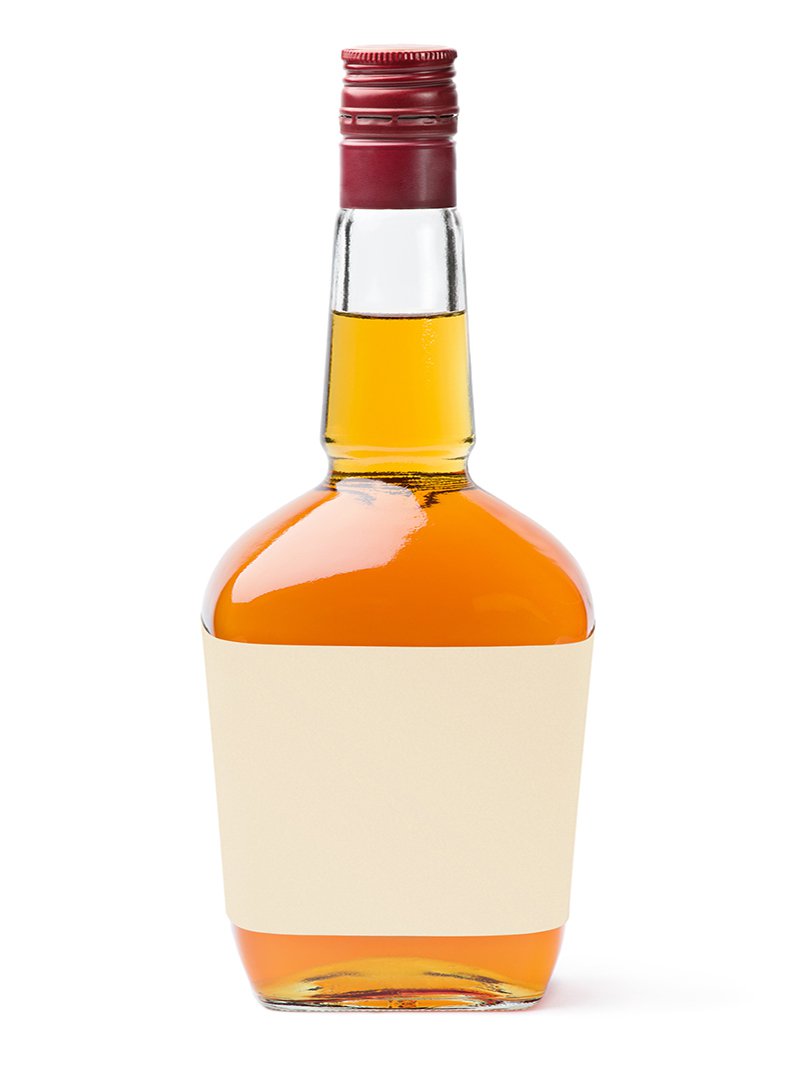
Over 100 years ago, scientific expeditions used high-proof alcohol—like rum—to store specimens. Scientists recently realized this alcohol helped preserve the DNA. By comparing this century-old DNA to modern fish, they discovered that tropical species are evolving rapidly in response to human activity.
This highlights the incredible power of museum collections! Just like we study ancient human DNA to understand our past, these "time capsules" allow us to see exactly how humans are biologically changing the planet over time.
#4. Caught red-handed
Speaking of leaving a mark, let's talk about fingerprints. A discovery in Spain has us rethinking the portable artistic potential of our cousins, the Neanderthals.
Archaeologists found the world’s oldest fingerprint captured in red ochre pigment on a rock, which is around 43,000-years old. But this wasn't just a smudge. The rock itself is shaped like a human face, and the fingerprint was placed precisely where the "nose" would be.This is a phenomenon called pareidolia—when you see faces in objects, like a cloud or a piece of toast.
The fact that a Neanderthal may have seen a face in this rock and added a painted nose suggests they may have had complex symbolic thoughts and maybe even a sense of self, helping further break the cave-man ooga-booga stereotype!
#3. On the nose
Speaking of Neanderthals and symbolic noses, let’s talk about the real deal, the actual sniffer!
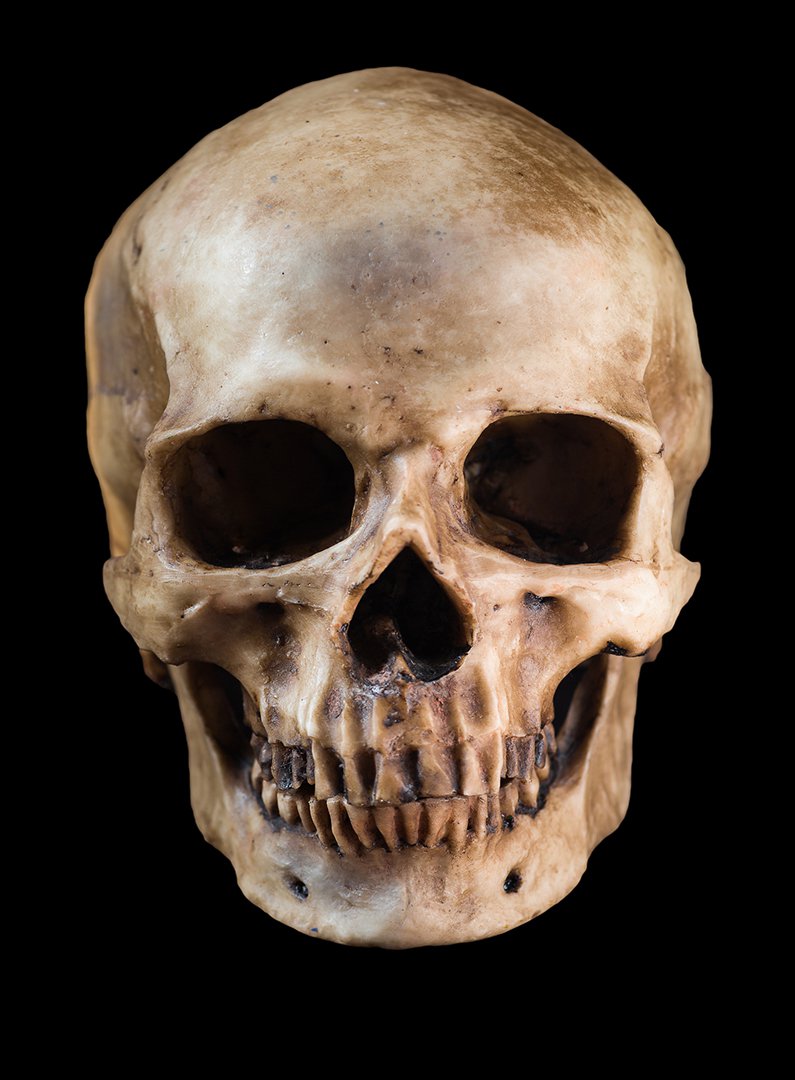
For a long time, scientists thought the large, broad noses of Neanderthals were a special adaptation to warm up cold, Ice Age air in Europe. But thanks to the "Altamura Man"—a fossil with the first-ever perfectly preserved internal nasal cavity—we now know that might not be true!
Researchers this year used this incredible fossil to show that Neanderthals didn't have the specific internal nasal structures for adapting to the cold like we thought they did. Instead, their unique face shape was likely just the result of genetics and development, not a radiator for freezing air.
It just goes to show, we have to follow the fossils, even when they sniff out our favorite theories!
#2. Heavy metal evolution
Nature versus nurture is a classic debate, but what if toxins in our environment helped make us more resilient to lead exposure? New research published this November found a surprising link between ancient lead exposure and human evolution. By analyzing fossil teeth, scientists found that our ancestors, Neanderthals, were exposed to toxic lead for over a long period of time.
Here is the twist: This toxic exposure might have influenced our genetics! The study suggests that to survive this toxicity, selection favored a genetic variant of a gene called NOVA1 in modern humans that helped protect brain regions related to language against the effects of lead exposure, unlike the variant of NOVA1 found in Neanderthals and other hominins.
This might have put them at a disadvantage. It’s a classic case of "what doesn't kill you makes you... an effective communicator
#1. A new face in the family album
Researchers from VCU here in Richmond have helped identify a brand-new potential ancestor in the human family tree!
Working in Ethiopia, the team analyzed ancient teeth dating back about 2.8 million years. They found that these teeth didn't belong to the famous "Lucy" species (Australopithecus afarensis), nor did they belong to the earliest humans (Homo). Instead, they belong to a previously unknown species of Australopithecus that was living alongside other hominin species!
This is huge because it proves different hominins may have overlapped with each other, and is further evidence of the bushy style of the family tree instead of following a linear path!