The first paper on oxygen was published two years before the Declaration of Independence’s signing. The author, Joseph Priestley, was a clergyman and chemist whose radical views spurred a mob in Birmingham, England to destroy his home, his books and his laboratory, eventually leading to his family’s immigration to America. In one innovative experiment, he compared how long a mouse could survive in a glass bottle with ordinary air versus one with heated-up mercuric oxide (which produces oxygen). The mouse lived a lot longer with the mercuric oxide. Priestley’s experiments helped dispute the claims that air “is a simple elementary substance, indestructible and unalterable”.
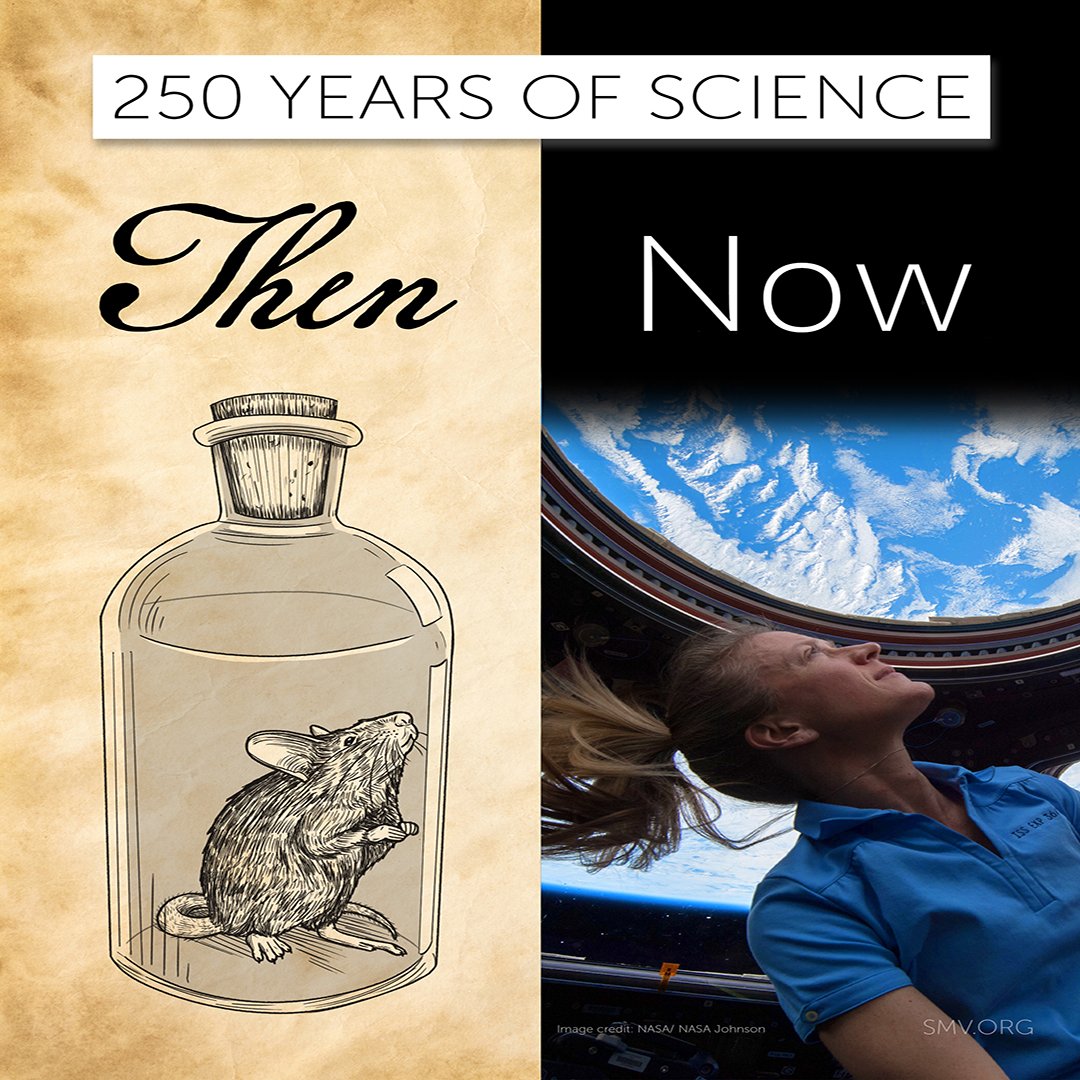
Today, we alter air on the International Space Station (ISS), where machines use electrical currents to split water molecules, creating oxygen and hydrogen. The ISS’ Oxygen Generation System can produce between 5 and 20 pounds of oxygen per day depending on their needs, enough to support its crew and laboratory animals and replace oxygen lost from experiment use and airlock depressurization.
As humans continue to deplete natural resources, chemists will continue to create new, valuable molecules at lower costs. One example is using oxygen and copper “scissors'' to snip carbon bonds of organic molecules. This produces chemicals used in medicine and agriculture at a fraction of the cost of traditional methods.
Relevant Virginia Standards of Learning (SOL) include: 6.7, LS.4, CH.3, ES.4, USII.9