VA250: Conservation
Scientific research in 1776 laid the foundation for many of the innovations we see today in the fields of medicine, chemistry, engineering and more. By looking back, we gain a better understanding of our scientific present and future!
Thomas Jefferson signed an Act that would establish what would become the U.S. Coast Survey during his presidency to create detailed and up-to-date nautical charts for safe passage into American ports and along the country's extensive coastline, for both civilian and military use.
Over two hundred years later, the U.S. Coast Survey evolved into the National Oceanic and Atmospheric Administration (NOAA). NOAA has many additional missions: to understand and predict changes in climate, weather, ocean and coasts, to share that knowledge and information with others and to conserve and manage coastal and marine ecosystems and resources.
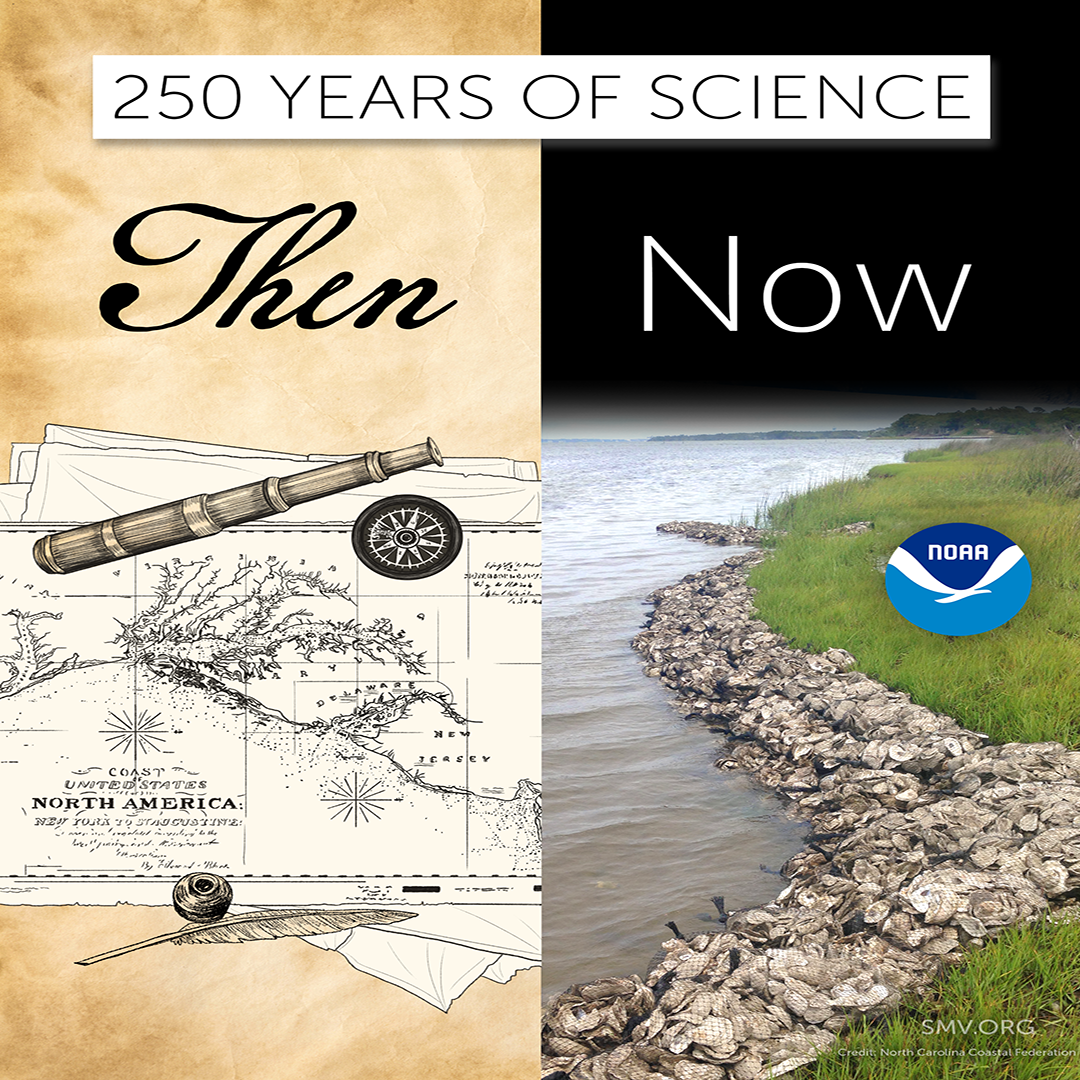
photo credit: North Carolina Coastal Federation
NOAA protects 1.3 million acres of coastal habitat, providing support for conservation projects like living shorelines. Living shorelines are modern human-made structures of plant, rock, and oysters that stabilize shorelines from erosion and also support local habitats. NOAA has helped implement this nature-based method across the country, including the coast of Virginia.
Relevant Virginia Standards of Learning (SOL) include: 1.5, 2.7, 3.8, 5.8, 6.6