VA250: Engineering
We can thank engineering for many of the structures, machines, systems and processes we use today. By applying scientific principles, mathematics and creativity, engineers make the seemingly impossible possible. And not just on land!
America’s first submersible with a documented record of combat use, the Turtle, was built in 1775 to attach explosives to British ships during the Revolutionary War. At 10 feet long, it could only hold a single occupant as it moved just below the surface of the water. On their own, the helmsman was tasked with twisting a hand crank to turn the propeller, adjusting the rudder to steer the vessel and operating a metal auger to attach bombs to enemy ship hulls.
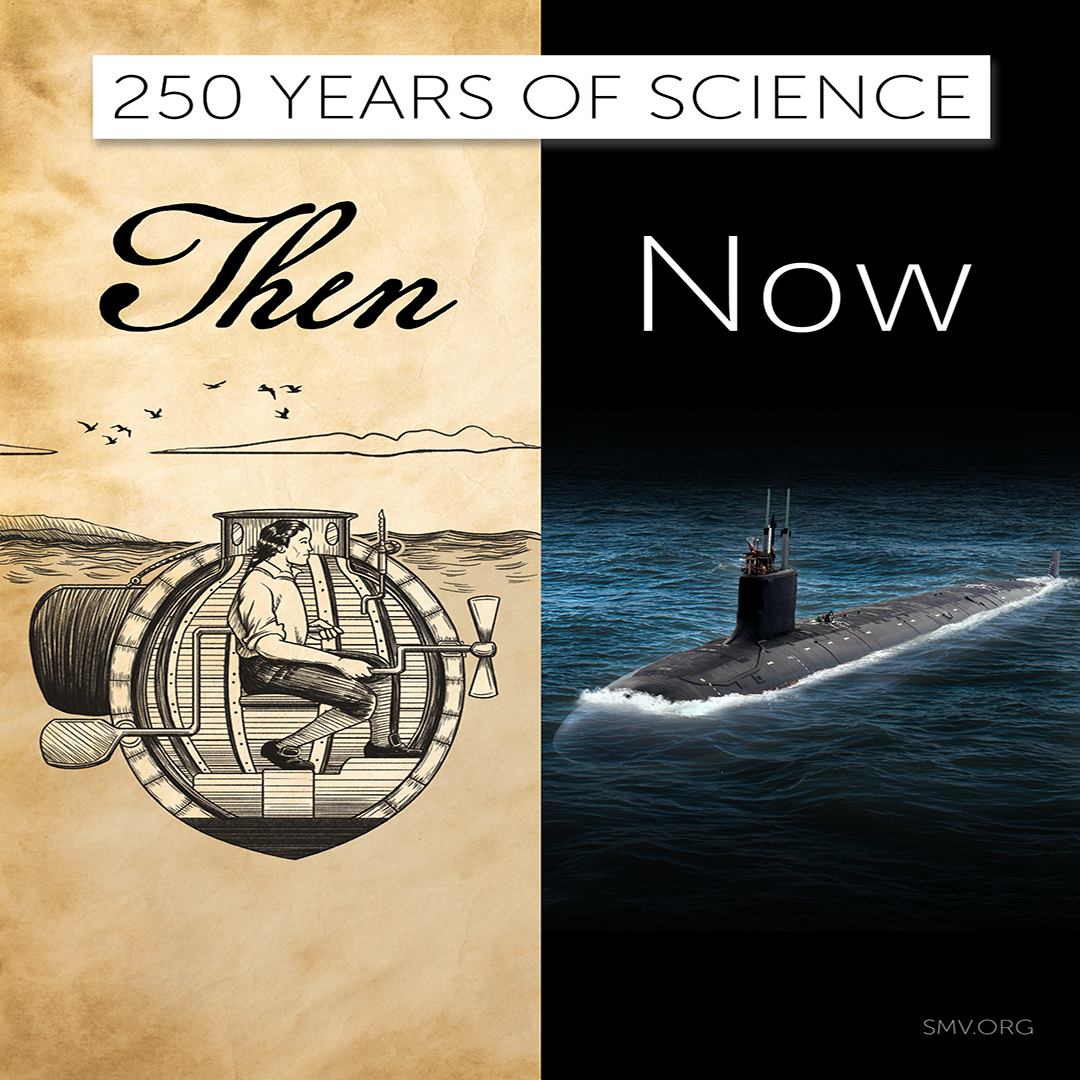
While the Turtle’s missions were not successful, today’s submarines can hold over a hundred people, stay underwater for months and dive hundreds of meters underwater. The USS Virginia (SSN-774) “fast attack” submarine was the first U.S. Navy sub to be completely designed on a computer and is longer than a football field.
As humankind continues to explore Earth’s oceans, we actually don’t need to engineer vehicles to send humans. Instead, our future ocean treks are taken by remotely operated vehicles (ROVs). With improved longevity, processing power and intelligence, ocean robots will act as our scouts, explorers, warning systems, monitors and scientific partners.
Relevant Virginia Standards of Learning (SOL) include: USII.9, VUS.5 and VS.13