We Love Scientific Definitions
Scientists think about the ways we show affection and romance all year long. To do so, they need to craft good definitions for these romantic behaviors. Well-defined terminology is a critical part of high-quality scientific research. Clear definitions help any scientific findings to be more widely understood and easily replicated. Let’s dig into some definitions used in real research about kissing, blushing and hugging!
Kiss
Kiss: A non-agonistic interaction involving directed, intraspecific, oral-oral contact with some movement of the lips/mouthparts and no food transfer.
Why do we kiss in the first place? When did kissing start? Do other animals kiss? To start answering questions like these, you have to define what kissing actually means. When a group of scientists wanted to trace the origin of smooching in humans, they needed a specific definition that could apply to all primates, not just humans.
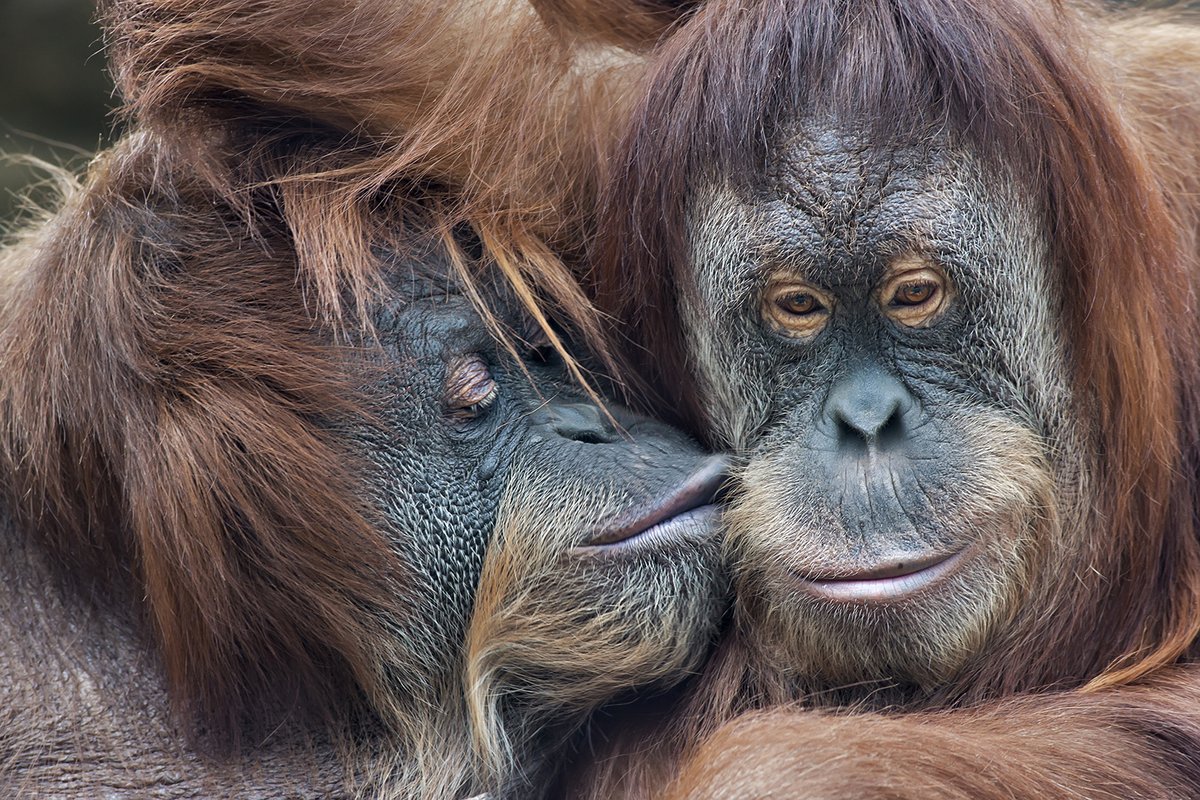
Many animals look like they're kissing, and it certainly meets our definition of adorable, but they didn’t meet all the criteria the paper set for its study. They found that most large apes today kiss and Neanderthals likely did too.
Blush
Blush: The involuntary reddening of the face that accompanies self-conscious emotions, such as embarrassment, shyness, shame and pride.
Scientists disagree on why humans blush. Some believe it is a higher-order mental process that requires awareness about yourself, other people’s perceptions and an understanding of social impressions and consequences. Others think it's a fast emotional response to being socially exposed.
To figure out why and how blushing occurs, one study used this definition of blushing to induce blushing in people and monitor their brain activity and cheek temperature. Instead of having their crush give them a “will you be mine?” note in class, the researchers played a video of the participants singing intentionally difficult karaoke songs back to them for their reaction.
The areas of the brain that were activated in participants are associated with immediate emotions, showing that blushing can happen without using longer socio-cognitive processing.
Hug
Hug: When two individuals approached one another and initiated the contact gesture of wrapping arms around the body and placing the head at the shoulder or along the abdomen.
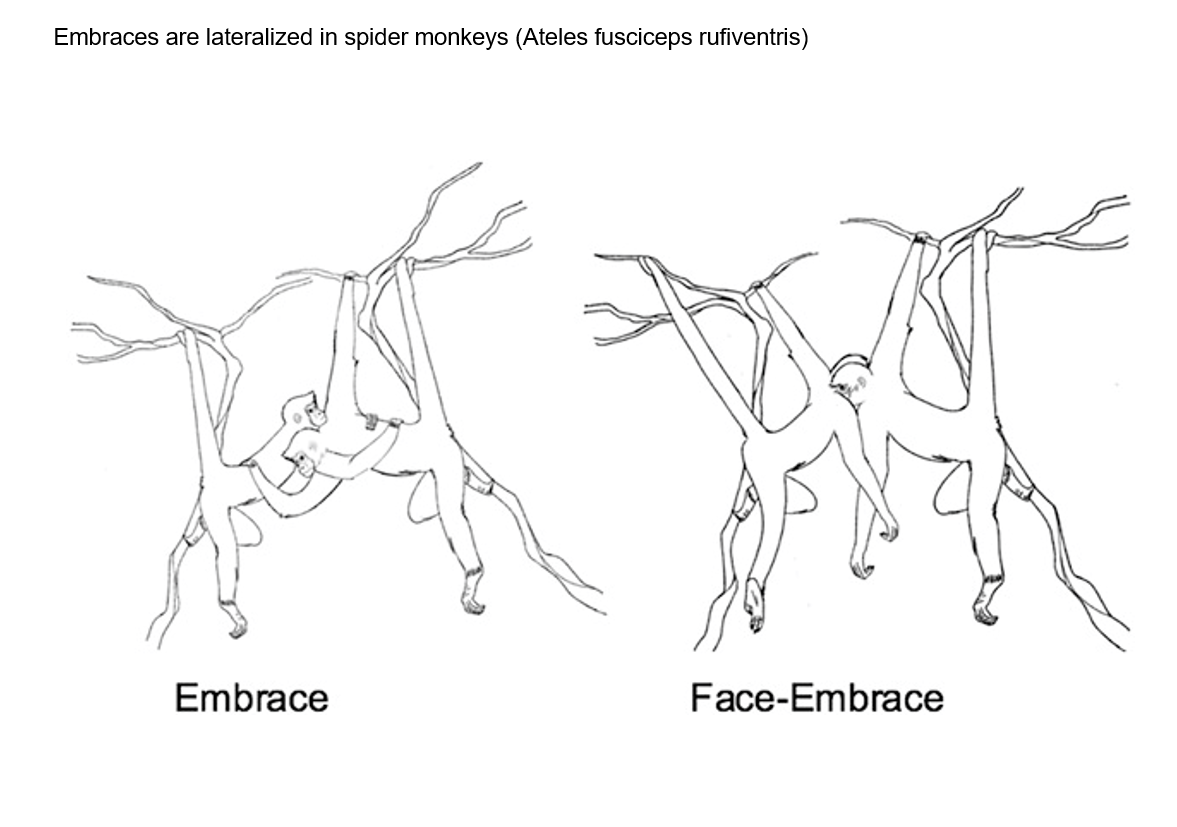
image credit: American J Primatol, Volume: 79, Issue: 6, First published: 27 March 2017, DOI: (10.1002/ajp.22654)
Spider monkeys either hug or embrace the left side rather than the right. It’s just one example of asymmetrical behavior found throughout the animal kingdom. Have you noticed that you step up the stairs starting with the same foot or always listen to a conversation with the same ear in a noisy room?
Researchers believe these side biases may partially reflect the asymmetrical organization of brain function. Scientists studied this phenomenon, called laterality, with three social behaviors in spider monkeys: embracing, face-embracing and grooming. They used the definition of embrace to distinguish face-embrace, a behavior uncommon to humans, from embrace in their data collection.